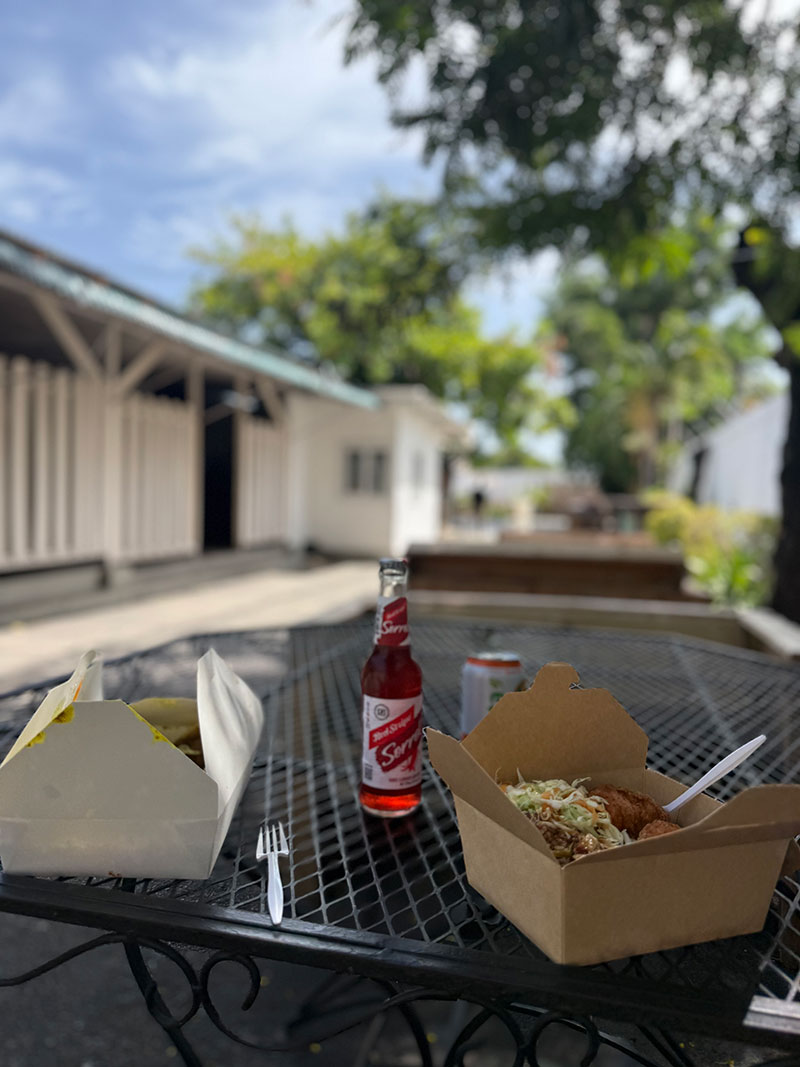

I just got back from my first trip to Jamaica, and I have so much to share with you. And of course, let’s start with the food. If you’ve ever had the chance to eat Jamaican food, you know it’s delicious. In this article, I’m sharing what to eat in Jamaica: the culinary specialties you absolutely have to try for an unforgettable experience.
A bit of context: my boyfriend is Jamaican, so I eat Jamaican food regularly. Whether he’s cooking, we’re at a restaurant, or even at his mom’s place. So I was already pretty familiar with the cuisine and the flavours. Obviously, we were super excited to be at the source to indulge.
Before I make you drool, don’t forget to follow me on Instagram, Pinterest, and YouTube.
You can also check out my Jamaica vlog and the following articles:
- What to Do in Kingston, Jamaica
- Our Experience at the AC Hotel Kingston
- Where to Eat in Kingston, Jamaica

Ackee and saltfish
We’re starting our list of what to eat in Jamaica with the country’s national dish: ackee and saltfish. It’s traditionally served for breakfast, sometimes with plantain and Jamaican dumplings on the side.
The fruit that looks like eggs
Ackee is a fruit that originally came from West Africa and grows in different parts of Jamaica. The tree prefers a warm, humid tropical climate and thrives at low altitude under generous sunshine. Once cooked, ackee has a soft, melt-in-your-mouth texture that resembles scrambled eggs. The dish is prepared with tomatoes, onions, thyme, and peppers.
A symbol of history and resilience
What few people know is that neither of the two main ingredients in this dish is actually from Jamaica. Ackee arrived from West Africa in the 1700s, brought over on slave ships. Saltfish was mainly imported from Canada (Newfoundland) and Norway by colonizers, since cod doesn’t swim in the warm Caribbean waters. It was a cheap source of protein used to feed enslaved people. This dish tells the story of the Jamaican people: with survival rations and ingredients imposed by history, their ancestors showed incredible creativity, pairing the creamy texture of ackee with the salty taste of the fish. They turned a meal born of necessity into a true culinary masterpiece known around the world.
I hope this makes you appreciate the beauty of these flavors even more, knowing everything behind your plate.
Be careful not to eat ackee raw, as it can be toxic.
Oxtail
It’s often one of the priciest items on the menu: oxtail. If I want to make my boyfriend happy, I know exactly what to order: oxtail. Rough day? Oxtail. Something to celebrate? Oxtail. It’s always the right answer.
Oxtail involves slow-cooking beef tails to tenderize this fairly tough cut of meat as much as possible. It’s served with a generous sauce and rice. It used to be a cheap cut of meat that nobody wanted, but today it’s one of the most beloved dishes in Jamaican cuisine. Another example of Jamaican resilience and creativity.
It’s also personally one of my favourite dishes. The flavours are so rich, the meat so tender. If you can only try one dish, go for the oxtail. And enjoy!

Curry Goat
It’s one of my favourite dishes: curry goat. Which I only eat if I’m not wearing white. Because yes, I occasionally stain myself, and curry doesn’t forgive. If the conditions line up, it’s a dish I love. The meat needs hours of cooking to become tender and has a very bold flavour. It’s usually served with white rice or rice and peas.
The history behind curry goat
While writing this article, I’m learning so much history behind each dish, and I figured it could help you learn a bit more about Jamaican culture on top of enjoying a good meal.
After the abolition of slavery in 1834, British authorities brought over more than 35,000 Indian workers to fill the labour shortage. They brought their spices and traditions with them. Over the years, the two cultures merged to create curry goat. Goats adapt easily to Jamaica’s warm climate, making them easier to raise than cattle. There are several nuances between the Indian and Jamaican versions, to name just one: the order of ingredients. For example, in the Jamaican version, curry powder is added directly to hot oil to release its aromas before any other ingredient, while the Indian version builds things up more gradually.
Jerk Chicken
I know you were waiting for this one. The famous Jerk Chicken, which makes mouths water around the world. But also sets a few unprepared ones on fire. It’s not the national dish, but it’s certainly the most well-known and most cited if you ask anyone to name a Jamaican dish. No list of what to eat in Jamaica would be complete without it.
So what exactly is jerk chicken? It’s chicken slow-cooked with a very spicy blend of seasonings, then grilled over wood fire.
The history behind jerk chicken
The earliest traces of jerk chicken date back to the 17th century. At the time, the Maroons, descendants of enslaved Africans who escaped Spanish and British colonizers, took refuge in the Jamaican mountains, notably the famous Blue Mountains, to live free.
However, they faced a major problem: cooking meat without the smoke giving away their location. That’s how they came up with the idea of digging deep pits in the ground to bury the fire. They covered everything with spices and leaves to mask the smoke. Interestingly, we talk about jerk chicken today, but back then, it was wild boar, which was abundant in the mountains, that was being cooked this way. Over the centuries, the cooking method evolved, with a major shift happening in the 1960s.
With industrial and tourism development, Jamaica ended up with a lot of unused metal oil barrels. Some people had the idea to clean them, cut them in half, and turn them into easily transportable barbecues, much more practical for street vendors. And I have to admit, I really love this style of cooking, I highly recommend it.
Born out of necessity, hidden in the mountains, jerk chicken is now an icon of Jamaican cuisine that comes in many forms, and can be found all over the world. I live in Toronto, and even though the source is always better, you can also find great restaurants there to discover jerk chicken, or to satisfy a craving before your next trip to Jamaica.

Festival
We can’t share a list of what to eat in Jamaica without mentioning festival. Festival is a lightly sweetened, elongated fried dough that often accompanies all the saucy dishes mentioned in this article. Crispy on the outside, soft on the inside, it’s a treat. Especially for a French girl like me who loves wiping her plate clean down to the last trace of sauce. No good food goes to waste here.
Legend has it that a chef was testing different recipes to go with fried fish and jerk. He had customers try one of his creations made from cornmeal and sugar, and they loved it. They described the experience as a festival in their mouth. The recipe was approved, along with a name that would stand the test of time: festival.
Jamaican Patty
If you’re looking for a snack for a small craving, I’ve got you covered. Well, I say “I,” but really, Jamaica has got you covered: the famous Jamaican patty. It’s a savoury, yellow-coloured turnover filled with spiced beef. There are several variations, but beef is the original version, and my personal favorite, if you want my opinion. The dough looks a bit like a multi-layered puff pastry, and its yellow colour comes from the turmeric powder added to the dough.
You can find patties everywhere. We even had some at the little café at the Bob Marley Museum after our visit. There are also two major patty chains in Jamaica that have been competing for years: Tastee and Juici Patties. If you’ve tried both, which team are you on?
Escovitch fish
I’ve talked a lot about meat, but Jamaica is an island, so you’ll obviously find plenty of fish and seafood. You’ll find it mostly along the Jamaican coastline. Fresh fish, straight from the catch, fried whole until the skin is super crispy. It’s topped with a tangy, spicy sauce. And that’s it, you’re set. Ideally, you eat it in a fishing village for the freshest, most authentic version.
I hope that now that you know what to eat in Jamaica, you’re ready to treat your taste buds and enjoy every bite. If you’re planning your trip, you might be wondering how to stay connected on your phone while you’re there. I put together a complete guide on how to use an eSIM while traveling.
Bon appétit !