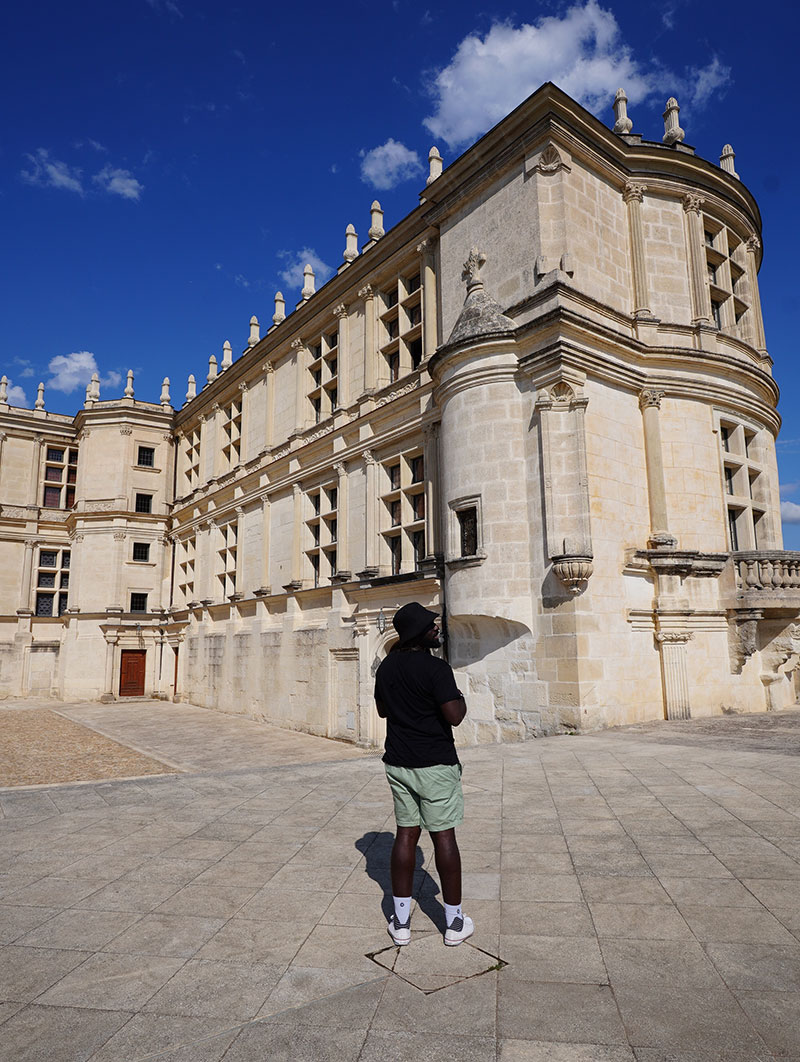

Today, we’re heading to a French department that holds a very special place in my heart: Drôme. I’m originally from neighbouring Ardèche and now live in Toronto, Canada, but I spent a good part of my life in Drôme, in fact, I was actually born there. Today, I want to share 15 incredible things to do in Drôme that I know you’re going to love. If you have a little extra time and feel like crossing the Rhône River, you can also check out my guide to the must-do activities in Ardèche. The two departments share a fascinating, sibling-like bond, and you rarely visit one without exploring the other.
Before heading out, always double-check whether advance reservations are required, as policies and hours can change depending on the season.
Before I go any further, don’t forget to find me on Instagram, Pinterest and Youtube.

Northern Drôme & Drôme des Collines
Le Palais Idéal du Facteur Cheval (The Ideal Palace)
I’m starting with the Palais Idéal du Facteur Cheval because it is easily one of the most unique landmarks in Drôme, and honestly, in all of France. I went back in 2021, the very first time my Canadian partner came to France with me. I was determined to impress him and show him just how rich and surprising my home region really is.
The Ideal Palace is the life’s work of a single man: Ferdinand Cheval. Back in 1879, while walking his rural mail route, this local postman tripped over a strangely shaped stone. Where most people would have just kept walking, swept up in their daily routine, Ferdinand Cheval saw the spark of a dream. He took it as a sign to start collecting these unusual stones and turning them into a work of art. Over the next 33 years, he gathered rocks along his daily mail route and single-handedly built what we now know as the Palais Idéal du Facteur Cheval.
During your visit, take a close look at the incredible diversity of styles and sculptures woven into the monument, and keep in mind that all of this was built before television, long before we had instant access to images of the world the way we do today. That detail really stuck with me. He drew all his inspiration from the postcards and travel magazines he delivered on his rounds. Fascinating!
(And yes, mission accomplished, we’ve gone back every single year since, and he has completely fallen in love with France!)
La Cité du Chocolat Valrhona
I’m giving you plenty of outdoor ideas to explore Drôme’s natural beauty, but I also wanted to include a few indoor gems in case you’re reading this on a rainy day! Head straight to the Cité du Chocolat Valrhona in Tain-l’Hermitage. I’ve actually mentioned it before in my post about things to do with the Pass Ardèche. Yes, it’s technically on the Drôme side of the river, but Tournon-sur-Rhône and Tain-l’Hermitage are twin towns where the sibling bond between Ardèche and Drôme feels strongest. While you’re there, you can even walk from one department to the other across the Passerelle Marc Seguin, the oldest suspension bridge in France still in use today.
Now, back to your taste buds. At the Cité du Chocolat, you’ll trace the journey of chocolate from bean to bar right on the historic site where the world-famous Valrhona chocolate factory was founded in 1922. Whenever I visit places like this, I always think about how amazed the original workers would be to see the company still thriving over a century later, and even more so to see thousands of visitors walking through the doors each year for tasting workshops and interactive, sensory exhibits.

Les Canotiers du Rhône (Rhône River Cruises)
Here is an experience I haven’t tried just yet, but I’m sharing it anyway because it looks truly unforgettable. When people picture Drôme or Ardèche, they think of rolling countryside, wide-open spaces, mountains, and winding valley roads, but we often forget the vital role the Rhône River has played (and still plays) in shaping this beautiful region. For centuries, it served as a major trade route for merchants, carved out our landscapes, and remains a key waterway today.
Les Canotiers du Rhône offer several types of scenic boat cruises departing from Tournon, Saint-Vallier, and Valence, including gourmet tasting cruises, sunset sails, and even bike-and-boat excursions. They pause operations over the winter, but they’re back on the water as soon as warm weather returns. I’ve officially put this on my list for next summer!

The Drôme Valley & The Vercors
La Tour de Crest (The Crest Tower)
The Tour de Crest isn’t just an iconic fixture of the Drôme skyline, it’s a monument woven into French history. Standing at 52 meters (170 feet) tall, it is the tallest medieval keep in France. If you drive through Crest, you can’t miss it towering over the town, though you might never have stepped inside to uncover its secrets. That was me right up until 2021, when some friends came to visit and I wanted to show off the hidden treasures of my home region.
Inside, you’ll learn how this massive tower was once part of a sprawling medieval fortress before serving as a state prison for 240 years. You can climb through the levels of the tower, explore daily medieval life, see preserved artifacts, and walk through recreated historical scenes that bring a distant era to life.
My absolute favourite part, though, is the open-air rooftop terrace, where you get sweeping 360-degree views of the Drôme Valley, the Vercors mountains, the Ardèche hills, and the Rhône Valley. Standing up there, you immediately understand why the builders chose this exact spot and height centuries ago. Nothing was left to chance.
Exploring the Vercors Massif
One of Drôme’s crown jewels is the Massif du Vercors, a vast Regional Natural Park whose beauty shines in every single season. There are countless ways to experience the Vercors: sampling local artisan cheeses, hiking through untouched wilderness, rock climbing, or spotting native wildlife. One unforgettable activity you might not have considered is an evening of stargazing. Since 2023, the Vercors has been officially certified as an International Dark Sky Reserve thanks to its remarkably low light pollution. It’s deeply grounding, and inspiring, to know places like this still exist, untouched by the glow of modern life.

La Chute de la Druise (Druise Waterfall)
I live in Toronto, just a short drive from Niagara Falls, so of course I’m going to recommend checking out a waterfall in Drôme! The vibe here is completely different, though: the Chute de la Druise is tucked between two dramatic limestone cliffs inside a natural site that has been protected since 1991. I haven’t had the chance to hike down to it myself yet, but I’ll update this section with more access details as soon as I do.
From my research, the waterfall sits on private land that the owners graciously keep open to the public for free, so please be respectful and pack out every bit of trash (a golden rule everywhere, of course, but always worth repeating). The trail down to the falls is also quite steep, so make sure to wear sturdy, comfortable shoes.
La Réserve Naturelle des Ramières
Drôme is packed with incredible outdoor spaces, and plenty of protected nature reserves. Having breathtaking landscapes is one thing, but preserving them from the pressures of everyday modern life is just as important.
The Réserve Naturelle des Ramières spans over 300 hectares (nearly 750 acres) along a 10-kilometer (6-mile) stretch of the Drôme River. It is genuinely gorgeous, restorative, and inspiring. You can explore the reserve on foot or by bike while keeping an eye out for some of the 1,189 wildlife and plant species that call it home. Right in the heart of the reserve, you’ll even find the former Allex train station, which has been converted into an interactive visitor and research center where you can learn all about the local ecosystem.
(Saoû Forest)
I’m willing to bet that if you’re planning a trip to Drôme, someone has already recommended the Forêt de Saoû. I have fond childhood memories of coming here with my family. When I went back last year carrying those little-girl memories with me, I expected everything to look instantly familiar, and you know what? I didn’t recognize a single thing! It was such a great reminder to revisit the places from our childhood through adult eyes.
The Forêt de Saoû is a natural mountain basin covering more than 2,500 hectares (over 6,100 acres), famous for its dramatic elevation gain, ranging from 450 meters (1,475 feet) at its lowest point up to 1,600 meters (5,250 feet) at its highest peak. Reading those numbers on a screen doesn’t quite do it justice, but having that kind of elevation change in a single forest creates extraordinary biodiversity and scenery. And you won’t just find native trees here: in 1924, wealthy industrialist Maurice Burrus bought the land to turn it into a hunting estate and tourist destination, planting tree species from around the world and building the scenic road around it. A few years later, he opened the Auberge des Dauphins, a manor modeled after the Petit Trianon at Versailles. Today it serves as a visitor center and mini-museum, even if you just step inside to admire the architecture, it’s worth it. Finding Versailles-style elegance tucked into a remote corner of Drôme is nothing short of surreal.
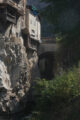
The Hanging Houses of Pont-en-Royans
I really hesitated before adding this one to the list because, technically, the Maisons Suspendues (Hanging Houses) of Pont-en-Royans sit just across the border in the Isère department. However, if you look at a map, they are less than a kilometer (half a mile) from the Drôme border, and I would hate for you to miss out on such a memorable stop.
You may have already seen photos of these colourful medieval houses clinging to the rock face and jutting out directly over the Bourne River. Looking at them, you almost wonder if they were built that way on purpose or if the earth shifted and pushed them out over the gorge. They were, in fact, deliberately engineered this way back in the 1500s to boost local trade. Because the narrow mountain road left very little room to build and timber was transported down the river, hanging the houses over the water allowed craftsmen and merchants to live right next to the river without blocking road access.
Listed as a Historic Monument since 1944, the village draws thousands of visitors every year. Right nearby, you’ll also find the Musée de l’Eau (Water Museum) and lovely riverside picnic tables. Quick tip: the best photo angle is right from the bridge!
Drôme Provençale (The South)
Le Château de Grignan
Another absolute must-see in Drôme is the Château de Grignan. Anyone who grew up in France definitely studied this place in school through the famous 17th-century Letters of Madame de Sévigné, she frequently wrote to her daughter, Françoise-Marguerite, who lived here after marrying the Count of Grignan. Dating back to the 11th century and later transformed into a grand Renaissance palace, the château sits right in the heart of southern Drôme.
For some reason, I had always pictured it as a massive, isolated fortress surrounded by empty countryside. It’s funny how our imaginations build up places we’ve heard about for years! In reality, the château rises right out of the center of the village (as most castles did back then), surrounded by lively, charming cobblestone streets that are well worth wandering.
You have a few ways to visit: a self-guided tour, a guided tour, or an exterior-only ticket. Since we arrived fairly late in the afternoon, we only did the exterior visit, and honestly, it was already breathtaking! The panoramic terrace is stunning, the views stretch for miles, and the architecture feels like stepping straight into another century. My only advice is to leave yourself plenty of time if you want to tour the interiors, and check their website calendar ahead of time, as they host fantastic cultural events throughout peak season.

Mirmande
There are so many gorgeous villages to explore in Drôme, but if I could only recommend one, I would send you straight to Mirmande without a second thought. You’re not quite in Drôme Provençale yet, yet you can already feel the air shifting from the northern part of the department. Steep, history-soaked cobblestone lanes wind their way up to the Sainte-Foy church at the top of the village. After thriving on silkworm farming in the 19th century, Mirmande was gradually abandoned and fell into ruin, until 1920, when renowned Cubist painter André Lhote bought a house here and founded a summer art academy that drew artists from all over.
Today, Mirmande is officially listed among Les Plus Beaux Villages de France (The Most Beautiful Villages of France). The valley views are gorgeous, and the stone architecture is impeccably preserved. While you’re there, treat yourself to some artisanal ice cream, we stopped on the terrace at Glacier Gemelli, whose founders trained in Italy. They close for the winter, so if you visit during the warmer months, don’t miss it!

Nyons
Can you hear the cicadas? Welcome to southern Drôme, a corner of the department that feels like stepping straight into a Provençal postcard. Warm sunshine on your skin, rolling hills stretching to the horizon, all framed by the Baronnies Provençales Regional Natural Park. As I recently shared in my guide to must-try local foods in Drôme, Nyons enjoys a unique microclimate that shapes both its landscape and its world-famous olive harvests.
The town itself is historic, beautifully preserved, and radiates warmth and southern charm. Just hearing the melodic southern French accents around town is enough to put a smile on your face. Around Nyons, you’ll find plenty of local olive oil producers selling directly from their estates, along with stunning lavender fields when in bloom (just remember to admire and photograph them respectfully without trampling the plants or trespassing on private property!).
La Sablière de Réauville (Réauville Sand Quarry)
While putting together this list of things to do in Drôme, I really wanted to offer plenty of variety, including off-the-beaten-path spots you won’t find in every standard guidebook! Head to southern Drôme to explore La Sablière de Réauville, where you can uncover more than 100 million years of geological history. Earlier, I mentioned how profoundly the Rhône River shaped this region, and this is another fascinating example. As you walk through the quarry, you’ll discover how the prehistoric sea that once covered the area left behind fossils, including ancient shark teeth, and how the Rhône carved through layers of rock to expose distinct geological eras. It’s an especially awesome stop if you’re traveling with curious kids who get to see what they learn in science class right before their eyes!

L’Abbaye Notre-Dame d’Aiguebelle
I still remember visiting the Abbaye Notre-Dame d’Aiguebelle when I was little. Unlike most traditional monasteries, this one created something you can actually find on supermarket shelves all across France today. Founded in 1137, the abbey welcomes visitors to discover the botanical craftsmanship the Trappist monks perfected over centuries, turning local herbs and plants into medicinal elixirs before creating a beloved fruit-and-plant syrup in 1949.
The syrup became so wildly popular that by 1996, the monks decided to sell the commercial production to a private company, as managing such a massive operation was no longer compatible with contemplative monastic life. During the sale, the brand name was slightly altered to Eyguebelle (the syrup you see in French grocery stores today) to distinguish the company from the abbey itself.
You can still tour the abbey, soak in its peaceful atmosphere and Romanesque architecture, browse the small museum, and pick up artisanal products still made on-site by the monks, like local honey and Alexion (a tonic crafted from 52 plants). To round out your visit, drive just a few kilometers down the road to the modern Eyguebelle estate in Valaurie, where the syrups are produced today. They offer a 20-minute self-guided circuit explaining how the syrups are made, plus a factory shop where we stock up every single trip to bring bottles back to Canada (yes, they’re heavy in a checked suitcase, but totally worth it, they’re nearly impossible to find in Toronto and way too expensive when you do!). We still haven’t managed to catch the museum while it’s open, so that’s on our list for next time!
I hope all these recommendations inspire you to discover the magic of Drôme! And if all that exploring works up an appetite, be sure to check out my guide to the must-try traditional foods and specialties in Drôme.
Bon séjour, and happy travels!