
aI know, I know, this is a travel and life-in-Canada blog. But behind all of that, there are real people going through life’s more or less easy chapters. I’ve shared several personal experiences here as resources for others around the world. My bladder surgery after my kidney infections a few years ago, for example, helped several women get a proper diagnosis. In this article, I’m sharing everything I’ve tested over the past year to relieve the pain linked to lipedema and hopefully put some ideas on your radar.
A year ago I received a lipedema diagnosis. It’s chronic condition that affects 10% of women worldwide. A condition that looks different for everyone, but with one shared reality: there is no cure. No cure. That was the shocking phrase I heard a year ago. There are only avenues to explore to slow the progression and relieve the pain.

I am not a doctor. Everything I share here is based on my personal experience and the recommendations I have received from my healthcare team. Always consult a medical professional before starting any new treatment or making changes to your health routine.
What is lipedema?
Lipedema is a chronic condition. It is an abnormal accumulation of fat, primarily in the arms and legs. This fat does not respond to exercise or diet, and it is painful.
A few tips
-
When testing new habits, take it one step at a time. Stabilize one habit before adding another. Trying to do everything at once often leads to feeling overwhelmed by all the changes. Step by step.
-
You will need patience and will likely need to try several things. Not everything will work right away, changes may not happen overnight, and adjustments may be needed along the way. Unfortunately there is no universal roadmap for relieving lipedema.
-
Be flexible. I always remind myself that if everything I do helps me feel better and improves my quality of life but makes my daily life miserable in the process, that’s not a viable long-term option.
-
Food is not your enemy. You need to nourish your body so it is strong and can support you in everything you do. Think of it like the fuel you put in your car. We need good food to give our bodies everything they need to carry us everywhere.
My goals after my lipedema diagnosis
- Reduce the pain in my legs.
- Manage my weight to avoid gaining weight and the risk of accumulating more affected fat.
- Find solutions to relieve the pain.
- Explore options that are viable long-term.
- Better understand how my body responds to certain situations, foods, different times of the month, and different seasons of the year.
Intermittent fasting
One of the first things my doctor recommended after my diagnosis was intermittent fasting. It was never something I had considered doing, and I had never even looked into it. So why try intermittent fasting with lipedema? To give my body time to rest. For 16 hours, my body rests and focuses on something other than digestion. The goal is to reduce inflammation. It also helps reduce sugar consumption, since eating within an 8-hour window makes me more focused on nourishing my body, and I’ve managed to cut out snacking much more easily.
A word of caution: intermittent fasting is not for everyone, and it’s not about skipping meals. It’s about eating differently. You still need to eat enough to nourish your body and meet your daily needs. I hear too often people say they’re doing intermittent fasting “by accident” because they skipped a meal. That’s not intermittent fasting. That’s undereating.
When my doctor suggested intermittent fasting, she also mentioned that I might lose some weight in the process. Her goal was to keep my weight under control and avoid gaining any additional affected fat. The aim was to lose healthy fat, since fat affected by lipedema does not respond to diet or exercise.
My personal experience
After a few weeks of adjustment, I’m genuinely happy with this rhythm. At the start I was very strict about it, using the Fasting Tracker app to log when I started and stopped eating. Now I’ve found my groove and don’t need it anymore. I’ve learned to be more flexible. If I go out with friends in the evening, I eat a little later and that’s fine. The idea, again, is to relieve the pain without making life miserable in other ways.
As I mentioned, it’s helped me cut back on snacking. I also find I have more energy, especially in the mornings for exercise. As I was doing a lot of hot yoga and hot pilates early in the morning and it worked really well for me. I think it’s helped me rethink my relationship with food and genuinely learn to nourish my body, giving it everything it needs to function well during those 16 hours of fasting, rather than just eating out of habit.
After 3 months I had lost 7 kg (15 pounds). Now, more than a year later, I’m sitting at 10 to 11 kg lost (22 pounds). Better energy, muscle tone, and mobility. That said, this is just one piece of the puzzle, not the only reason I’ve changed so much in a year.
Reducing sugar
I have a sweet tooth, I love sugary things, so this part isn’t always easy. And at certain points in the month I crave sugar more than others. Without depriving myself, I’ve reduced my intake. I allow myself a treat here and there, without creating frustration, and again, by trying to be more intentional about what I eat. I try to make more conscious choices. Choosing a cookie I’m going to really enjoy, for example, so it’s a genuine pleasure rather than mindless eating.
I work on an 80/20 principle for a better balance. I’m someone who prefers finding balance over restriction.
The goal is to reduce inflammation, since sugar is well known to not be particularly good for us.

Bone broth
I’ve already talked to you about bone broth, and I even shared my bone broth recipe a few weeks ago. I’ll let you read that article to understand all the benefits, but in short, what interests me most is the anti-inflammatory side of things. My bone broth includes ginger and turmeric, both of which have anti-inflammatory properties. Let’s be honest though, incorporating ginger and turmeric into your daily diet can be a bit tricky. Drinking it before breaking my fast makes it much easier to include consistently.
You can buy it ready-made, but honestly it’s more economical to make it at home, and you know exactly what’s in it. If you want to try it before committing to making your own and you’re in Toronto like me, Impact Kitchen sells it by the cup.
Shockwaves therapy
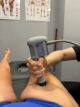
Out of everything I’ve tried to relieve my lipedema, this is probably the biggest surprise of the past year: shockwave therapy.
Before going further, what exactly is shockwave therapy?
Shockwaves, or acoustic shock waves, are high-energy sound waves that travel through the body’s tissues. They are used in medicine to stimulate blood circulation, reduce inflammation, and promote tissue repair.
In simpler terms: it’s a technique that sends powerful little sound waves into body tissue. These waves wake up circulation, help repair tissue, and reduce pain and inflammation.
Think of it as giving the treated area an energy boost to help the body function better and feel lighter.
I have a full video on the subject with before and after photos that you can watch here.
Shockwaves for lipedema are sometimes recommended after surgery, but I haven’t planned to have surgery. I still decided to book an appointment with a specialist. Luckily, she was very familiar with lipedema. She didn’t make any promises, but suggested we give it a try.
Sessions last 30 minutes. The first month I went twice a week. Then I left for a month. We continued with two months at twice a week. Then another break of 6 to 7 weeks because I went to Bali to become a yoga teacher. Starting in January 2025 I went twice a month, and now I go once a month. If you’re in Canada like me, this can be done at a physio clinic and may be covered under the physiotherapy portion of your insurance.
Why try shockwave therapy for lipedema?
As with many things related to lipedema, there is limited research, or at least not always enough information and variety of studies available.
Research by Siems and his team (2005) shows that shockwaves can reduce inflammation and oxidative stress in tissue, and improve skin texture and elasticity in people with lipedema or cellulite. In other words, it helps the body drain more effectively and prevents tissue from hardening, which is what we often feel as that sensation of heaviness or tightness.
What my physio explained to me in simple terms (roughly the equivalent of a physiotherapist in France, though training and scope of practice differ): lipedema is like small pockets of fat that are cut off from blood supply, which is why they don’t respond to exercise or diet. Shockwaves break down those little barriers to release the fat. In my case (and I can only speak from my own experience), since I was already losing weight, I was able to lose some of that fat and, more importantly, significantly reduce the pain.
My results with shockwave therapy for lipedema
Before shockwaves, you couldn’t touch my thighs or pinch them without it being unbearable. Now I can tolerate it. The texture of my skin has also changed, smoother, not perfect, but more comfortable for me visually.
For a more detailed breakdown, I really encourage you to watch my video where I go into much more detail.

Recovery Boots (Pressotherapy)
Next up is another essential tool for relieving my lipedema: my recovery boots. Often used by athletes, these are systems that wrap around the legs and use pneumatic compression to massage the muscles. The goal is to replicate a drainage massage and relieve that heavy leg feeling.
I’ve been using mine regularly since my diagnosis in June 2025. I have the pair from Currentbody. It’s an investment, but if you use them regularly, the math works out to be much more affordable than paying for weekly massages as my doctor recommended. I don’t know what budget my doctor thinks I have, but weekly massages aren’t realistic for me. I’m a partner with Currentbody, you can get 10% off with the code FRINGINTO or by using my link.
There are several modes and you can adjust the duration and pressure. At the start I used lower pressure and have gradually increased it. I really feel the difference. It relieves me and genuinely moves fluid. I’ve tested it many times, especially in the heat. After an hour in the boots I can lose 1 to 1.5 cm of thigh circumference. Fluid only of course, but that gives you an idea of the effect. And fair warning: you’ll need to pee quite a bit afterwards! It has to go somewhere, haha.
Before buying a pair, you might want to see if you can try them at a clinic or with a physio. If you’re in Toronto like me, you can book a session at RCVRI downtown, and some gyms also offer them for use on-site.

Dry brushing
I bought the brush. I’ve tried it several times, but with the recovery boots I’ll be honest, I prefer the boots because they’re more passive. I can do something else at the same time.
The goal of dry brushing is to stimulate the superficial lymphatic capillaries to replicate the effect of manual lymphatic drainage. It helps move stagnant fluid. The advantage of dry brushing: it’s much more affordable and easy to pack when you travel.
Women’s Vitamins for 50+
When I was diagnosed last year I was 38. Not 50. And yet that’s exactly what my doctor recommended to support my system. Ask your own doctor whether this might be something that could help you too.

Massage
As I mentioned briefly earlier, massage is strongly recommended for relieving lipedema. But not just any massage. I’m putting together a list of places I’ve tested and approved in Toronto, because unfortunately very few practitioners are trained in or even aware of the condition.
Before I share that list, here are a few tips:
- Always call or email before booking to ask who you should book with. Who on the team is familiar with lipedema or most comfortable working with it?
- Ask specifically for gentle manual lymphatic drainage.
- Absolutely avoid Brazilian lymphatic drainage, which is too painful and will make inflammation worse. I had it done for years because it was trendy. I was in agony every time but thought that was just how it was supposed to feel.
Therapy
An essential pillar that I’ve rarely seen discussed in the context of lipedema: therapy. Having a psychologist is, in my view, a must for coming to terms with this new reality. I have a full article on mental health in Canada and how to find a psychologist if you want more details.
Why does it matter? You are going through changes in your body and your way of life. Having someone who can support you, guide you, and truly listen makes a real difference. Something that comes up often in what I read is loneliness. Having an ally by your side will help you feel less alone in facing the condition.
Personally, I had been in therapy for several months already, and having a trusted person with an established relationship helped me enormously. Not only after the diagnosis but also during the uncertainty and waiting period. We know that a lipedema diagnosis can take 10 to 15 years to receive, so we worked on the possibility that I might never get one, and on the fact that this wouldn’t invalidate the legitimacy of my pain. Then later we talked about my relationship with my body, accepting a body that is changing, and the mental load of managing all these aspects of life to slow the progression and reduce the pain.
I’m being this open about it to help reassure you, to show you that you’re not alone, and to try to break down the barriers that still exist around mental health.
Compression Garments
This appears lower on my list of things to explore for lipedema relief, but it’s probably one of the first recommendations you received. I’ve been wearing compression stockings for years, back when I was misdiagnosed and told I simply had poor circulation in my legs. And honestly, they help a lot. If you’re in Canada and have insurance, check whether you can get one or two pairs covered per year. The advantage is that the pair will be custom-made and perfectly fitted to your body.
Cold Plunge
I’ve tried cold water immersion, but the research on the topic is quite varied and unfortunately often conducted only on men. I enjoyed it but perhaps more for the mental aspect. Also noticed a mild effect on my legs. I would stay in for 2 to 3 minutes at 4 degrees. Then when I went to Bali for my yoga teacher training, we had a session with a specialist. I asked his opinion and he recommended doing several 30-second sessions rather than staying in too long.
All of this to say: this area is very under-researched and you’ll need to do your own research and listen to your body. There is always a risk that it causes too much stress on the body and actually increases inflammation.
Sauna
Sauna is recommended for lipedema relief as it stimulates lymphatic circulation and reduces inflammation. Steam rooms, however, are not recommended. Unfortunately I don’t have access to a sauna, only a steam room, but the few times I’ve been able to try a sauna it felt really good.

Hydration
Very, very important: you need to drink enough water. And by enough, I don’t mean one litre a day. Do your research and calculate based on your own situation. Take electrolytes if you want (I love Liquid I.V.), especially if you sweat a lot, in hot weather, or after exercise like hot yoga or hot pilates, which I was doing a lot of until recently. Remember that your body is made up of 70% water. Think of it like keeping a mill running so it doesn’t spin dry and start creaking everywhere (if you haven’t read my about page, my name is Astrid Moulin, which makes the image a little funnier in French).
Staying well hydrated is essential, even without lipedema!
Coffee/Alcohol
Again, I’m not a doctor, but based on my research and my doctor’s advice, it’s best to limit alcohol and coffee consumption when you have lipedema.
I’ve never drunk coffee and I’ve barely drunk alcohol for years, so I can’t tell you whether cutting them out made a difference for me personally. But it’s definitely worth exploring as a way to try to reduce inflammation.
Physical activity
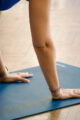
And we come to one of the most essential parts of this very long article on how to relieve lipedema: movement. You need to move to stimulate lymphatic circulation. Moving helps reduce pain and inflammation by activating the muscles, which creates a natural drainage effect.
That said, not all sports are recommended. Low-impact, gentle activities are the priority. Swimming, yoga, and pilates are great options. Strength training is also important to continue building muscle mass, which we naturally start losing in our thirties. Maintaining good muscle mass helps us on several levels: staying fit, feeling strong, and activating that natural drainage we mentioned earlier.
Most people advise against running, HIIT classes, and high-intensity sports, but I have a friend who runs marathons with lipedema, so the most important thing is really to listen to your body and find a type of movement that feels good for you. And most of all, movement you actually enjoy so you actually want to do it.
My experience:
I’ve been doing yoga for over 10 years and became a certified yoga teacher a few months ago, following my diagnosis, specifically to be able to help women with lipedema. I do pilates, cycling, paddle boarding in the summer in Toronto, and I walk a lot. We often underestimate the effect of walking, but it’s a really great movement option: gentle, at your own pace, low cost. You can go alone with music, a podcast, or an audiobook, or with company for a good chat. It helped me a lot last summer when I was hitting around 15,000 steps every day.
I hope this list gives you some avenues to explore to relieve your lipedema. Know that despite everything, a diagnosis can be a shock or a relief, but it’s never trivial. You have every right to feel sad, angry, or like it’s unfair. Sending you so much love wherever you are in the world.